
Introduction
The dot product and cross product are two fundamental operations in vector algebra. Although they both involve multiplying vectors, they produce very different results.
The dot product gives a scalar that measures how aligned two vectors are, while the cross product gives a vector perpendicular to both original vectors and measures the area they span.
Dot Product (Scalar Product)
Geometric Definition
For two vectors  and
and  , the dot product is defined as:

where  is the angle between the vectors.
Component Form
If  and
and 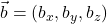 , then:

Angle Between Two Vectors

If
•  → angle is acute
•  → angle is obtuse
•  → vectors are orthogonal
Projection of One Vector on Another
Scalar projection:
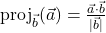
Vector projection:
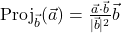
Physical Interpretation
• Work done: 
• Power: 
• Detecting perpendicular directions in mechanics and navigation
Cross Product (Vector Product)
Geometric Definition

The direction is perpendicular to the plane containing both vectors (right-hand rule).
Determinant (Standard Representation)
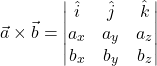
Expanded Component Form

Geometric & Physical Meaning
Area of the parallelogram formed by the two vectors:

Area of triangle:

Cross product gives directions for several physical quantities (e.g., torque, angular momentum).
Properties


Zero if vectors are parallel.
Scalar Triple Product
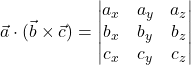
Gives the volume of the parallelepiped formed by the three vectors.
If the value is zero, the vectors are coplanar.
Vector Triple Product

Useful in simplifying expressions in mechanics, electromagnetics, and fluid dynamics.
Applications in Engineering
Torque:

Angular momentum:

Magnetic force:
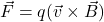
These operations are extensively used in aerospace dynamics, 3D rotations, structural analysis, and electromagnetics.
